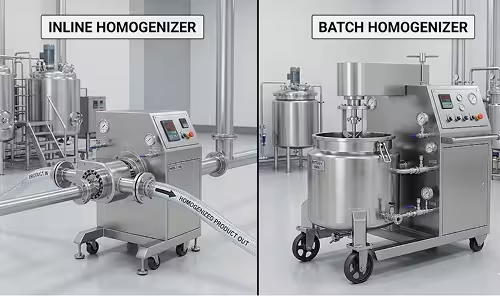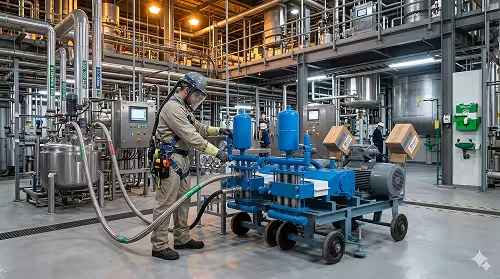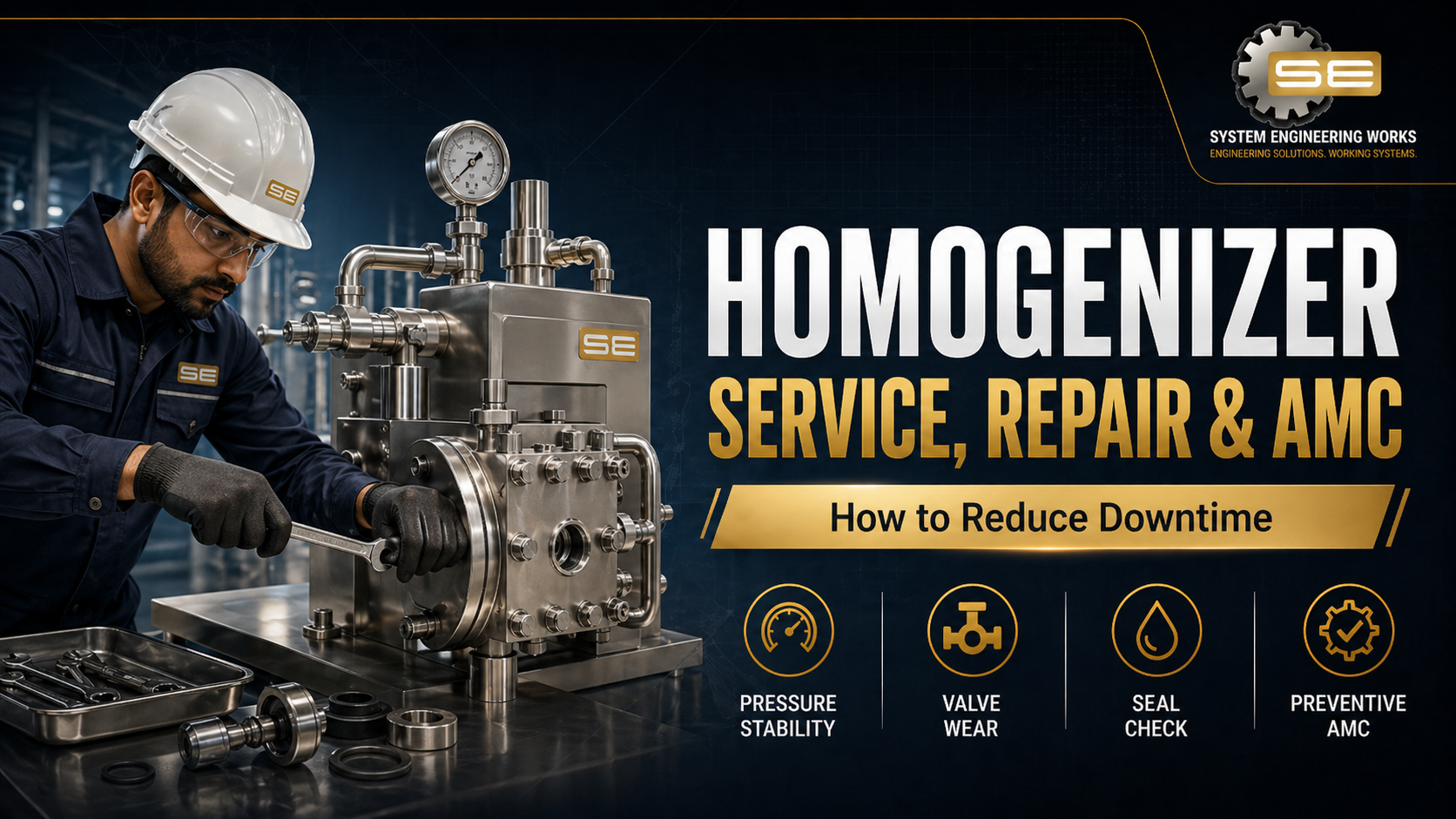
Answer First: How Does Homogenizer Service Reduce Downtime?
Homogenizer service reduces downtime by finding wear before it becomes a production stop. The most common warning signs are pressure instability, seal leakage, valve wear, vibration, abnormal noise, oil contamination, motor overload, and inconsistent product texture. A planned AMC catches these problems earlier than emergency breakdown repair.
Why Homogenizers Fail in Production
A high-pressure homogenizer works under demanding mechanical and hydraulic conditions. Small wear at the valve, plunger, or seal area can quickly affect pressure generation and product result. Operators may compensate by increasing pressure, but that often accelerates wear and energy consumption.
Warning Signs Plant Teams Should Track
- Pressure does not hold at the set point.
- Product texture or fat separation changes.
- Milk, cream, beverage, or emulsion quality varies between shifts.
- Leakage appears near seal or pump head areas.
- Noise or vibration increases during operation.
- Machine temperature rises beyond normal pattern.
What a Useful Homogenizer AMC Should Include
| AMC Activity | Why It Matters |
|---|---|
| Pressure test | Finds valve wear or pressure drift |
| Seal inspection | Prevents leakage and contamination risk |
| Lubrication review | Protects bearings and power-end life |
| Spare planning | Reduces wait time during breakdown |
| Operator feedback | Finds small symptoms before failure |
Spare Parts to Keep Ready
Plants running daily production should not wait until failure to procure seals, valve kits, O-rings, gaskets, plungers, and pressure-side wear parts. The right minimum stock depends on machine model, operating hours, product type, and distance from the service provider.
Request a Quote from SEW if your homogenizer is showing pressure drift, leakage, vibration, or product inconsistency.