Answer First: What Is the Difference Between Pasteurization and Homogenization?
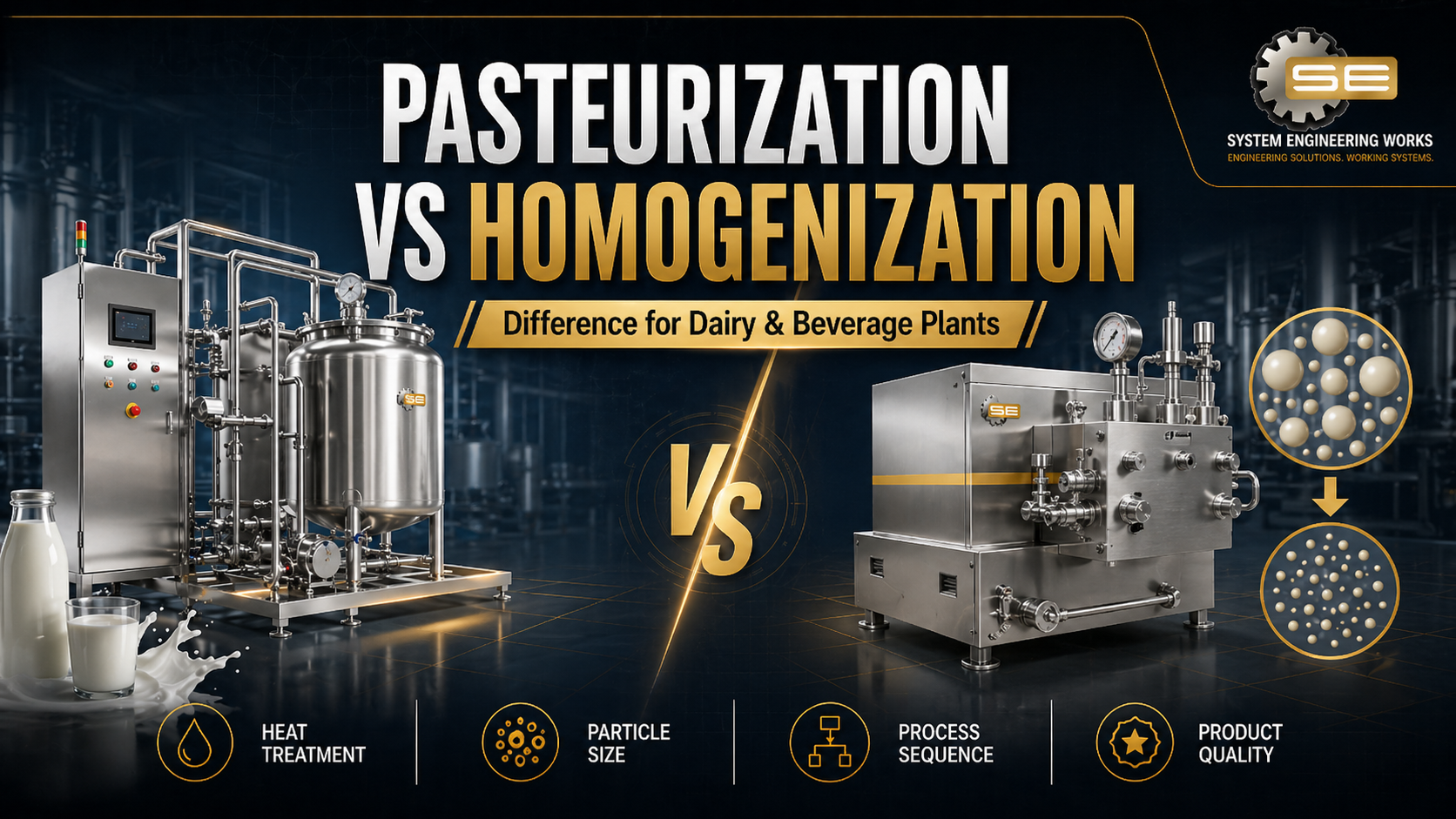
Pasteurization and homogenization are different processes. Pasteurization uses heat to reduce microbial risk and improve product safety. Homogenization uses high pressure to reduce fat globule or particle size and improve texture, stability, and consistency. Dairy and beverage plants often need both, but one cannot replace the other.
Pasteurization: Safety and Shelf Life
Pasteurization is a thermal process. Milk or beverage is heated to a specified temperature, held for a specified time, and cooled. The goal is to reduce harmful microorganisms while preserving product quality as much as possible.
Homogenization: Texture and Stability
Homogenization is a mechanical high-pressure process. Product is forced through a narrow homogenizing valve, creating turbulence and shear. In milk, this reduces fat globule size so cream does not separate easily. In beverages and emulsions, it helps improve consistency and reduce settling.
| Question | Pasteurization | Homogenization |
|---|---|---|
| Main purpose | Microbial safety | Texture and stability |
| Method | Heat treatment | High pressure and shear |
| Main equipment | Pasteurizer | Homogenizer |
| Result | Safer product | Uniform product |
| Can replace the other? | No | No |
Where Both Fit in a Dairy Line
A typical dairy line may pre-heat milk, homogenize it, complete pasteurization holding, cool the product, and send it to storage or packaging. The exact sequence depends on product, fat percentage, pressure, heat recovery design, and plant layout.
Common Buyer Confusion
Some buyers assume pasteurized milk is automatically homogenized. That is not true. Milk can be pasteurized but non-homogenized, or pasteurized and homogenized.
Request a Quote from SEW if you want help deciding where pasteurizer and homogenizer equipment should fit in your production line.