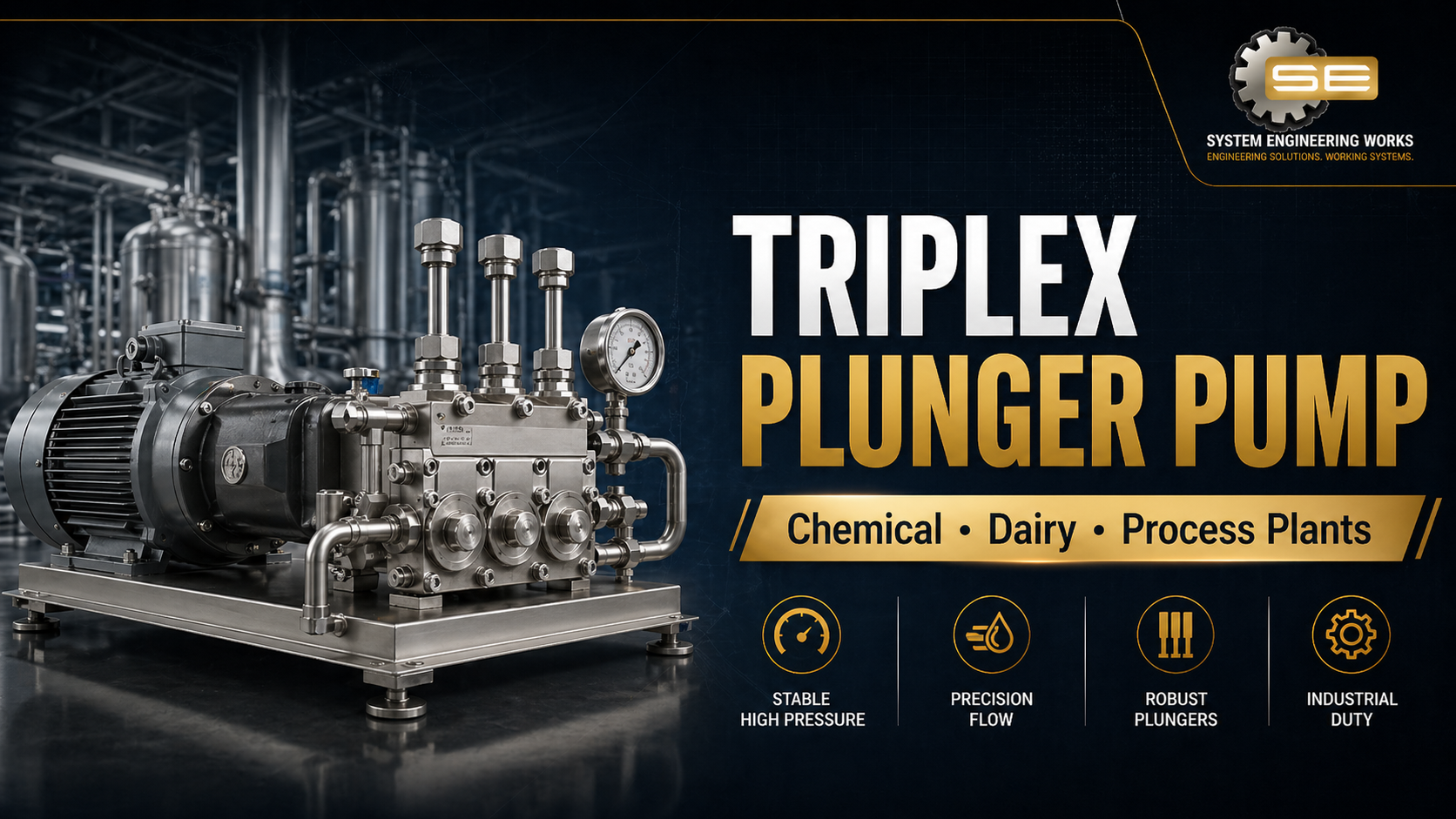
Answer First: When Is a Triplex Plunger Pump the Right Choice?
A triplex plunger pump is the right choice when a chemical, dairy, food, or process plant needs high-pressure liquid movement with stable flow. It is often selected for chemical transfer, metered dosing, CIP cleaning, high-pressure washing, boiler feed support, and process systems where centrifugal pumps cannot generate enough pressure.
The term triplex means the pump uses three plungers. This design reduces flow pulsation compared with a single plunger and supports smoother high-pressure operation.
Where Triplex Plunger Pumps Are Used
- Chemical plants: transfer, dosing, flushing, and process circulation.
- Dairy plants: CIP cleaning, high-pressure process support, and utility duties.
- Food plants: washing, cleaning, transfer, and special process applications.
- Industrial plants: hydro testing, cleaning, and pressure boosting.
Selection Inputs That Matter
| Input | Why It Matters |
|---|---|
| Flow rate | Defines plunger size and pump speed |
| Discharge pressure | Defines power requirement and pump-end design |
| Fluid type | Determines MOC, seals, and valve material |
| Temperature | Affects seal selection and clearances |
| Duty cycle | Determines whether standard or heavy-duty design is needed |
Plunger Pump vs Diaphragm Pump
Buyers often compare triplex plunger pumps with diaphragm pumps. Plunger pumps are typically preferred for robust high-pressure duties where the fluid is compatible with the plunger and sealing arrangement. Diaphragm pumps are useful when isolating the pumped fluid from the drive mechanism is important.
Why Pulsation Control Matters
Even triplex pumps create some pulsation. In sensitive applications, pulsation dampeners, correct suction piping, and proper foundation design help reduce vibration and pressure fluctuation.
Request a Quote from SEW with your required flow, pressure, fluid details, and operating hours.