Answer First: What Should Triplex Plunger Pump Service Check First?
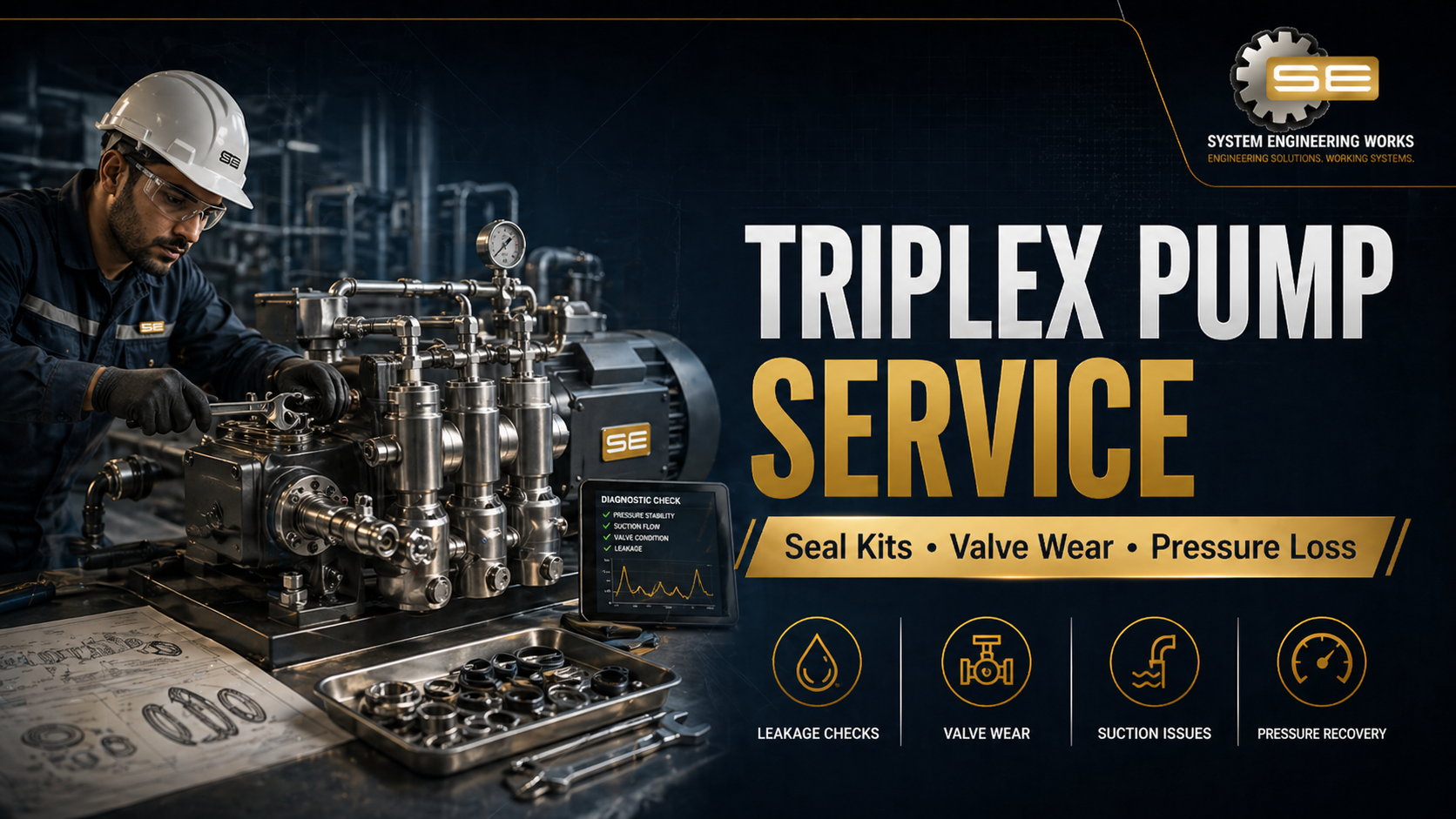
Triplex plunger pump service should first check pressure loss, seal leakage, valve wear, suction conditions, pulsation, vibration, lubrication, and relief valve operation. Most pump failures give early warning signs before complete breakdown, especially unstable pressure, leakage, noise, and reduced flow.
Common Causes of Pressure Loss
- Worn suction or discharge valves.
- Damaged seal kit or packing wear.
- Air entering the suction line.
- Insufficient NPSH or suction starvation.
- Relief valve bypassing too early.
- Worn plunger surface.
- Incorrect RPM or drive issue.
Seal Kit Replacement: Why Timing Matters
Seal kits are wear parts. Waiting until heavy leakage appears can damage plungers, reduce pressure, contaminate the surrounding area, and stop production. Plants running critical duties should keep planned seal replacement intervals based on operating hours and fluid type.
Valve Wear Symptoms
| Symptom | Likely Area to Inspect |
|---|---|
| Pressure drops gradually | Valves, seals, plungers |
| Sudden pressure loss | Relief valve, broken valve, suction issue |
| Heavy vibration | Pulsation, foundation, suction piping |
| Fluid leakage | Seal kit, plunger, packing area |
| Noisy operation | Valves, bearings, suction cavitation |
Preventive Service Plan
A good preventive plan includes pressure logging, leakage inspection, oil check, valve inspection, seal replacement planning, plunger surface review, dampener condition check, and operator training.
Request a Quote from SEW for triplex pump service. Send flow, pressure, fluid, symptoms, and photos to help diagnose the issue faster.