Answer First: When Should a Batch Pasteurizer Be Repaired or Retrofitted?
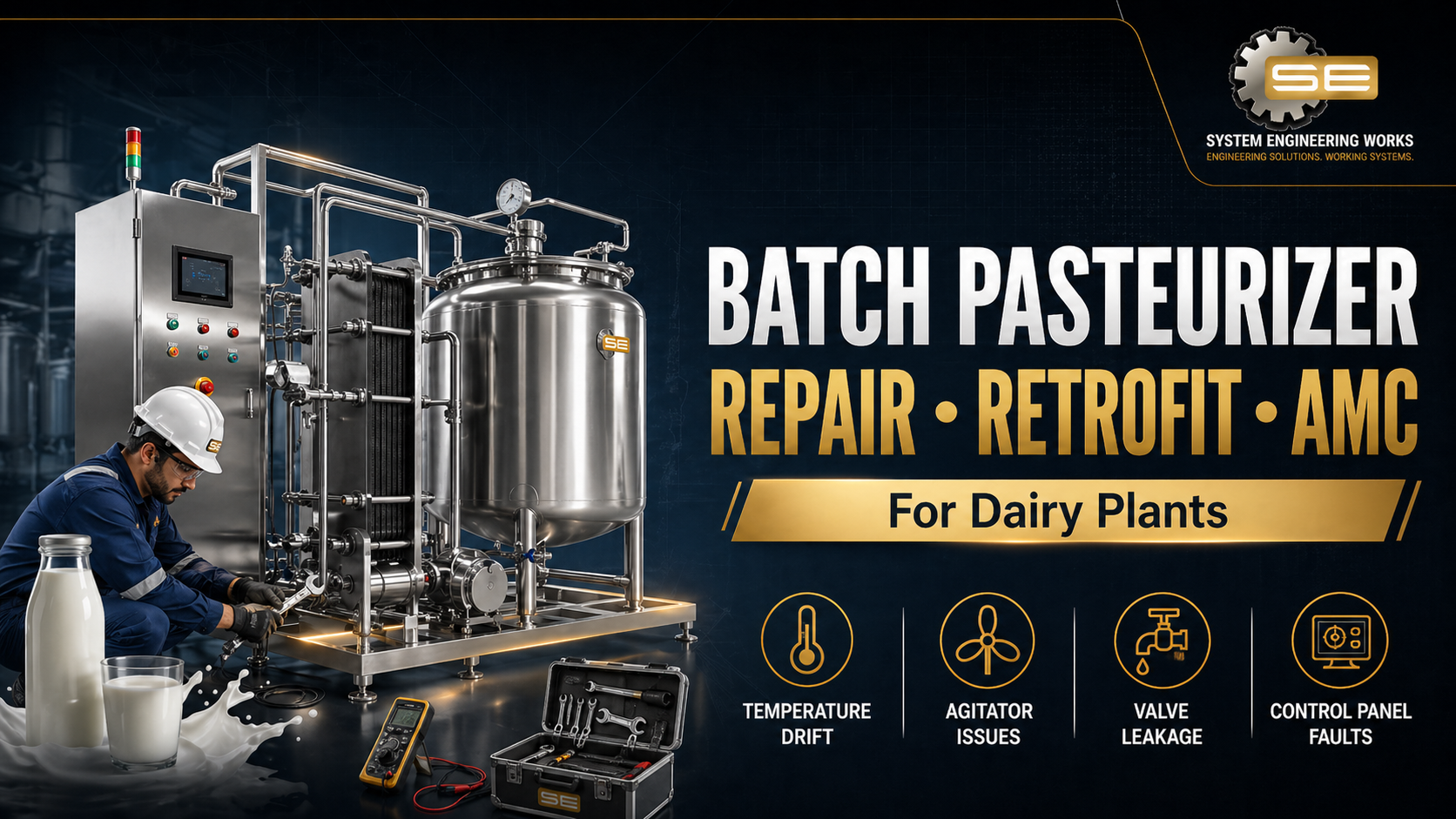
A batch pasteurizer should be repaired when a specific fault is limiting safe operation, such as heating delay, temperature drift, valve leakage, agitator failure, or cooling problems. It should be retrofitted when the basic vessel is still usable but controls, insulation, valves, sensors, or cleaning features no longer meet production needs.
Common Symptoms in Batch Pasteurizers
- Heating takes longer than before.
- Temperature overshoots or falls during holding.
- Agitator noise, vibration, or uneven mixing appears.
- Cooling takes too long and delays the next batch.
- Valves leak or do not seal properly.
- Insulation damage increases heat loss.
- Operators cannot reliably record time-temperature data.
Repair vs Retrofit vs Replacement
| Condition | Best Action |
|---|---|
| One valve, sensor, or agitator fault | Repair |
| Old controls but sound vessel | Retrofit |
| Poor heating/cooling performance | Repair or retrofit after inspection |
| Undersized capacity for current production | Replacement or HTST upgrade |
| Hygiene or structural concerns | Replacement may be safer |
Retrofit Options That Improve Reliability
Useful retrofits include digital temperature control, improved temperature sensor placement, upgraded valves, better insulation, agitator service, safer electrical panels, improved drainability, and CIP-friendly modifications where feasible.
Why Batch Pasteurizer Problems Affect Product Quality
Slow heating, poor agitation, or unstable temperature can create inconsistent thermal treatment. For dairy, ice cream mix, paneer milk, and curd milk, this affects safety, texture, shelf life, and customer complaints.
Request a Quote from SEW for repair or retrofit support. Share batch size, product, heating source, cycle time, symptoms, and photos.