Answer First: What Is a Batch Pasteurizer Machine?
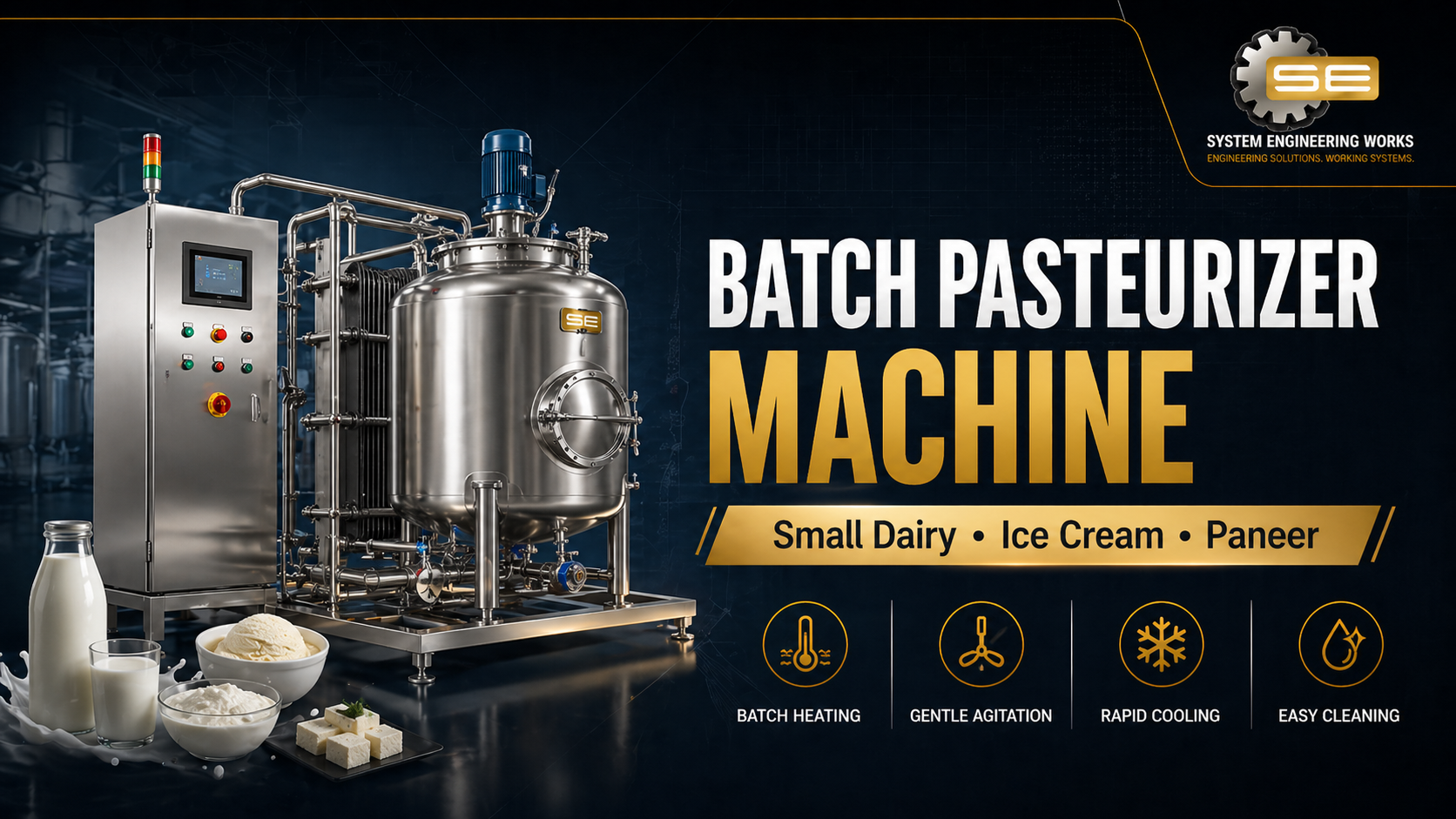
A batch pasteurizer machine heats a fixed quantity of milk, ice cream mix, paneer milk, curd milk, or beverage base to the required pasteurization temperature, holds it for the required time, and then cools it before the next process step. It is different from an HTST pasteurizer because the product does not flow continuously through a plate heat exchanger.
For small and mid-sized Indian plants, batch pasteurization is often the practical first step because it is simpler to operate, easier to clean, and more flexible for different products.
Best Applications for Batch Pasteurization
- Small dairy plants producing milk, curd, paneer, or flavored milk.
- Ice cream plants preparing mix before homogenization and ageing.
- Food startups testing recipes before investing in continuous lines.
- Plants with multiple SKUs and uneven production schedules.
How to Size a Batch Pasteurizer
Batch capacity should be selected from the number of batches you can realistically process in a shift. Heating, holding, cooling, discharge, and cleaning time all reduce the number of productive hours available.
| Plant Type | Common Batch Size | Selection Note |
|---|---|---|
| Small dairy | 100-300 litres | Good for local milk and curd production |
| Ice cream unit | 200-500 litres | Match with homogenizer and ageing vat capacity |
| Paneer plant | 300-1,000 litres | Consider coagulation and downstream handling |
| Growing dairy | 500-2,000 litres | Plan for future HTST upgrade if volume is rising |
Key Components Buyers Should Check
- Heating method: steam, hot water, or electric depending on utilities.
- Agitator: prevents localized overheating and supports even temperature.
- Cooling: chilled water or external cooling loop should match the batch size.
- MOC: SS 304 is common for dairy; SS 316 may be required for aggressive cleaning or acidic products.
- Controls: digital temperature control improves repeatability and recordkeeping.
Batch Pasteurizer vs HTST Pasteurizer
Choose batch pasteurization when volumes are lower, product variety is high, and capital cost must be controlled. Choose HTST when the plant needs continuous high-volume processing, better energy recovery, and consistent line automation.
Request a Quote from SEW with your litres per batch, product type, heating source, and expected production hours.