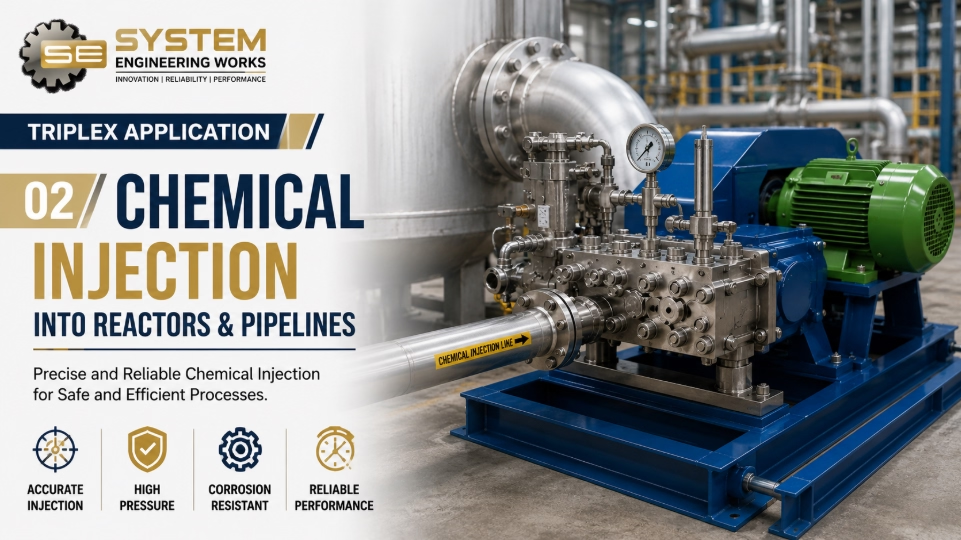
Chemical Injection into Reactors & Pipelines
Overview
Reactor feed and pipeline injection require a pump that maintains exact dose rate against varying back-pressure. In batch reactors common in Indian API pharma, dye intermediates, and agrochemical plants, system pressure can swing by 20–40 bar during a reaction cycle. A centrifugal pump cannot hold dose rate under these conditions. A diaphragm pump loses accuracy as diaphragm flex reduces at high pressure.
SEW's Vanguard Series triplex plunger pump injects at fixed volumetric output per revolution regardless of discharge pressure — up to 200 bar. Accurate injection even as reactor pressure builds during an exothermic reaction.
How It Works
Chemical is drawn from a storage vessel into the triplex pump cylinder through the suction valve. Each plunger stroke displaces a fixed volume through the discharge valve into the reactor or pipeline injection point — against whatever pressure exists on the discharge side, the same pressure-independent principle behind reliable water injection for secondary oil recovery. Three cylinders firing at 120° intervals produce near-continuous flow with low pulsation, avoiding injection hammer in reactor vessels.
Injection rate is set by VFD speed control. The pump can ramp up or down in response to DCS flow demand signals, maintaining dose rate proportional to reactor feed rate.
Bare Unit Use
Pharma and chemical plant engineers order the bare triplex injection pump for reactor feed lines where an existing pump has failed or proved inaccurate. Direct replacement for diaphragm and gear pump installations. SS 316 or Hastelloy C wetted parts available for highly corrosive reactor chemicals. Flow: 40–480 LPM, pressure: up to 200 bar.
Skid Package Use
For new reactor feed systems, SEW supplies the complete injection skid: storage vessel, triplex pump, VFD with 4–20 mA input for DCS control, flow meter, pressure transmitter, relief valve, and injection quill — mounted on a drip-tray skid. Delivered ready to connect to reactor inlet line. Used in: API pharma, dye intermediate, agrochemical, and polymer plants in Maharashtra, Gujarat near Ankleshwar, and Rajasthan.
Why SEW
Pressure-independent accuracy — positive displacement maintains dose rate regardless of reactor pressure variation. Critical for batch processes where pressure swings during reaction.
DCS-compatible VFD control — pump speed scales to 4–20 mA signal from plant DCS, maintaining proportional dose rate.
Corrosion-resistant wetted parts — SS 316 standard, Hastelloy C available for aggressive reactor chemicals.
Nashik manufacturer — fast delivery and local service for Maharashtra and Gujarat chemical clusters, including Vadodara and Rajkot.
See full specifications on the SE-Vanguard HP Triplex Pump product page.
Need help selecting the right equipment for your application?
Get in Touch →