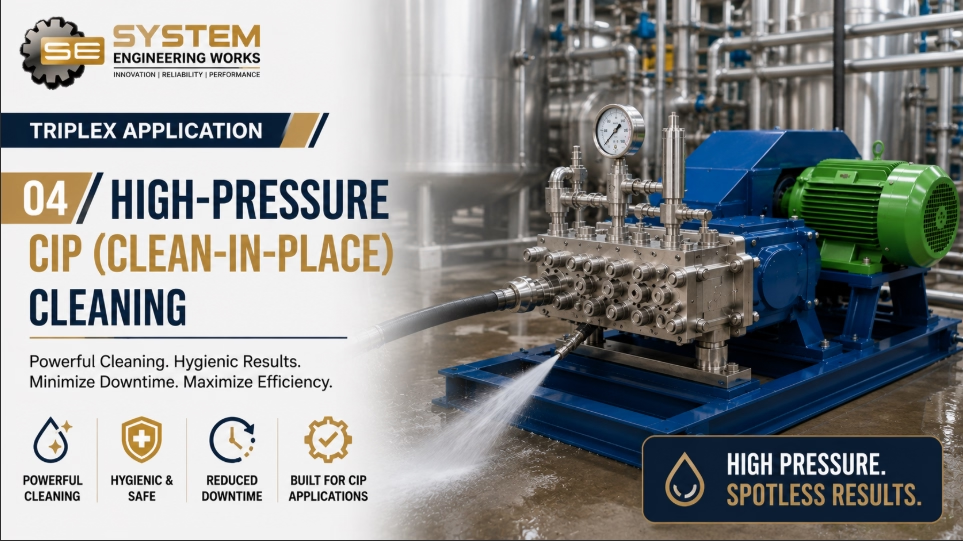
High-Pressure CIP (Clean-In-Place) Cleaning
Overview
Fouling — milk stone, biofilm, product residue — accumulates on the internal surfaces of dairy, food, and beverage processing equipment: pasteuriser plates, homogenizer channels, filling lines, storage tanks, and transfer pipelines. In Indian dairy plants operating 16–20 hours a day, inadequate CIP leads to microbial contamination, FSSAI audit failure, and batch rejection.
SEW's Vanguard Series triplex plunger pump delivers high-pressure, high-flow CIP solution — caustic, acid, sanitiser — through spray nozzles or direct impingement to break down fouling deposits that low-pressure CIP systems miss. Effective CIP reduces manual cleaning, cuts chemical consumption, and keeps dairy and food lines compliant with FSSAI hygiene requirements.
How It Works
CIP solution is held in a temperature-controlled balance tank — typically 70–80°C for caustic wash, ambient for acid wash. The triplex CIP pump draws from the tank and circulates solution through the equipment circuit at 20–80 bar and 40–200 LPM, depending on the fouling type and equipment geometry, the same jetting force behind general descaling and high-pressure water jetting. High-pressure spray nozzles or jetting heads break deposits off internal surfaces. Spent solution returns to a drain or recovery tank. Cycle sequence: pre-rinse → caustic wash → intermediate rinse → acid wash → final sanitiser rinse.
Bare Unit Use
Dairy plant engineers and food processing contractors order the bare triplex CIP pump to replace failed low-pressure CIP pumps or to upgrade CIP pressure for new pasteurisers and homogenisers with tighter hygiene specifications. Available with SS 316L wetted parts and EPDM seals for caustic and acid CIP chemical compatibility. Flow: 40–200 LPM, pressure: 20–80 bar.
Skid Package Use
SEW supplies complete CIP pump skids: SS 316L triplex pump, motor, VFD for flow control, pressure gauge, suction strainer, SS balance tank connection, and circuit connections — mounted on a SS drip-tray skid for hygienic installation in dairy plant CIP rooms. Used in: milk processing plants, cheese and paneer lines, ice cream manufacturing near Anand, and UHT filling lines across Maharashtra, Gujarat, Punjab, and Rajasthan.
Why SEW
20–80 bar CIP pressure — removes milk stone and biofilm deposits that low-pressure CIP (3–5 bar) systems cannot break. Reduces manual intervention between CIP cycles.
SS 316L wetted parts, EPDM seals — compatible with NaOH, HNO₃, and peracetic acid CIP chemicals. No corrosion or seal degradation in dairy CIP service.
FSSAI hygiene compliance — high-pressure CIP system designed to meet FSSAI Schedule 4 equipment hygiene requirements for dairy processing.
Indian manufacturer, Nashik — spare seals and plungers in stock, with service reach into Ahmedabad and Mumbai. Minimises unplanned downtime in dairy plants running two or three shifts.
See full specifications on the SE-Vanguard HP Triplex Pump product page.
Need help selecting the right equipment for your application?
Get in Touch →