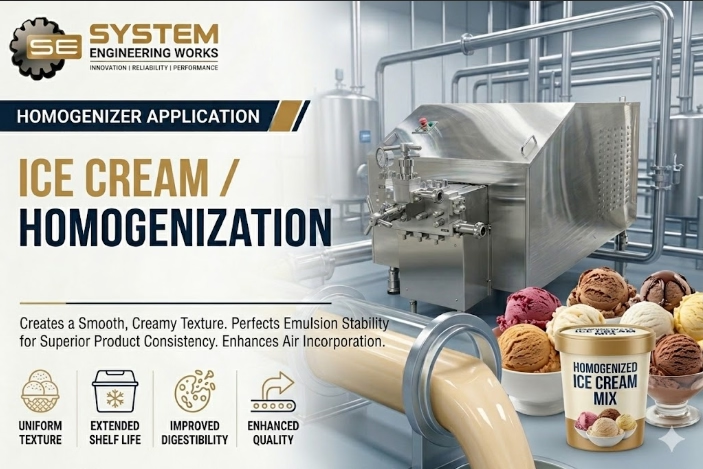
Ice Cream Mix Homogenization
Overview
Ice cream texture defects — iciness, sandiness, fat globule agglomeration — begin at the homogenization stage. If fat globules in the mix are not reduced to below 1–2 microns and uniformly coated with milk protein (casein micelles), they reagglomerate during ageing and freezing, producing a coarse, icy texture that no downstream process can correct. In India's ₹20,000+ crore ice cream and dairy market, texture is the primary driver of repeat purchase — particularly for premium and value-added segments growing at 15–18% annually.
SEW's Titan Series homogenizer produces the fat globule size distribution required for smooth, stable ice cream mix — reducing globule size to 0.5–1 micron in two-stage configuration — in continuous-flow production at capacities from 500 LPH to 5000 LPH.
How It Works
Pasteurised ice cream mix (fat: 8–12%, MSNF: 9–12%, sugar: 13–16%, stabiliser/emulsifier blend) is fed to the homogenizer at 60–70°C — the standard pre-homogenization temperature at which fat is fully molten. The Titan Series triplex pump raises mix pressure to 150–200 bar (first stage) and 30–50 bar (second stage). High shear through the valve gap reduces fat globule size and redistributes casein coating uniformly across the globule surface. Homogenised mix proceeds to the plate cooler and ageing vat.
Bare Unit Use
Ice cream manufacturers order the bare homogenizer for integration between the pasteuriser and the plate cooler on new or expanded processing lines — the same duty point used in dairy plants running milk homogenization on the Titan Series. Available in 500 LPH to 5000 LPH. SS 316L contact parts. Two-stage valve configuration standard for ice cream mix. Operating pressure: 150–200 bar (stage 1) + 30–50 bar (stage 2).
Skid Package Use
SEW supplies the homogenizer on a SS 304 skid with feed pump, inlet/outlet connections, and pressure gauges — ready to install between pasteuriser and plate cooler. In active use at ice cream manufacturing facilities across Maharashtra (including installations near Pune and Mumbai), Gujarat, Karnataka, and Uttar Pradesh, serving regional and national brands.
Why SEW
Two-stage valve configuration — first stage breaks fat globules; second stage prevents reagglomeration. Standard for ice cream mix homogenization per Dairy India processing guidelines.
Operating at 150–200 bar — consistent fat globule reduction to 0.5–1 micron. Eliminates iciness and improves overrun stability in finished ice cream.
FSSAI-compliant SS 316L contact parts — food-grade stainless steel meets FSSAI Schedule 4 hygiene requirements for dairy processing equipment.
Indian manufacturer, Nashik — local service, spare valves in stock. Minimises production downtime in high-throughput ice cream facilities.
Full model specifications, capacity range, and food-grade certification details are on the SE-Titan HP Homogenizer product page.
Need help selecting the right equipment for your application?
Get in Touch →