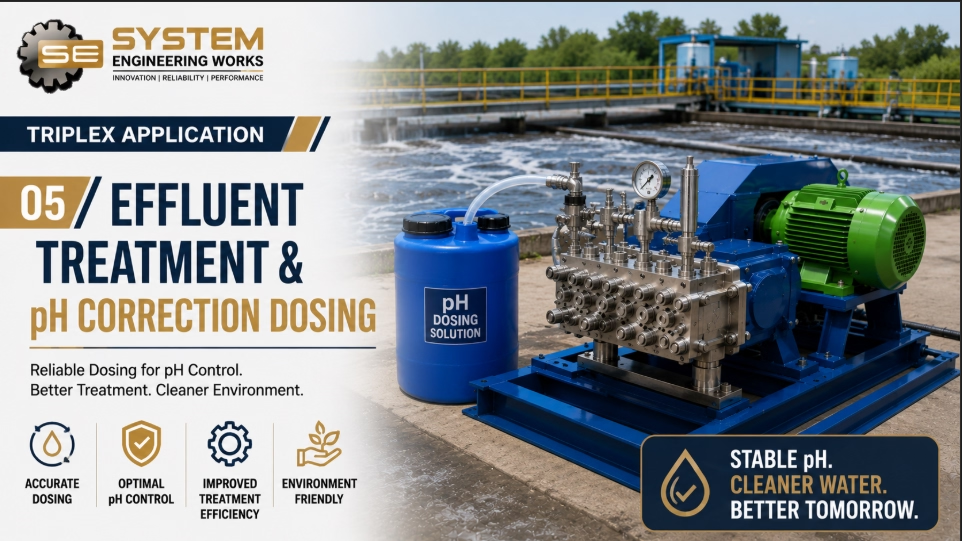
Effluent Treatment & pH Correction Dosing
Overview
Effluent Treatment Plants in Indian textile, pharmaceutical, chemical, and food processing facilities must meet CPCB and state pollution board (MPCB, GPCB, KSPCB) discharge norms. pH correction — dosing acid or alkali to neutralise effluent before discharge — is a mandatory step in most ETPs. Underdosing risks non-compliance and closure notice. Overdosing wastes expensive caustic or acid and can push pH out of range in the other direction.
SEW's Vanguard Series triplex plunger pump doses acid (H₂SO₄, HCl) or alkali (NaOH, lime slurry) into the equalisation or neutralisation tank at the flow rate and pressure required for your ETP capacity, from small 10 KLD units to large 1000+ KLD industrial ETPs.
How It Works
pH correction chemical is stored in an HDPE day tank upstream of the neutralisation chamber. The triplex pump draws from the tank and injects into the effluent stream through an injection quill — typically downstream of the pH sensor that feeds the control loop, using the same VFD-driven proportional control as general chemical dosing and metering systems. Pump speed is set by VFD responding to the pH controller's 4–20 mA output, increasing or decreasing dose rate as the measured pH deviates from setpoint.
The positive displacement mechanism ensures dose rate is proportional to pump speed regardless of injection back-pressure — important in ETPs where neutralisation tank pressure varies with effluent level.
Bare Unit Use
ETP operators and environment engineering contractors order the bare pump to replace failed dosing pumps or upgrade from diaphragm dosing to higher-flow triplex dosing for capacity-expanded ETPs. Available with PTFE-lined or SS 316 wetted parts for acid and alkali service. Flow: 40–480 LPM, pressure: up to 50 bar for ETP injection service.
Skid Package Use
SEW supplies complete pH correction dosing skids: HDPE day tank with level switch and vent, triplex pump, VFD panel with 4–20 mA pH controller interface, discharge pressure gauge, injection quill, and drip tray — mounted on a common skid frame. Sized to ETP capacity and chemical dose requirement. Used in: textile dye ETPs (Gujarat, Tamil Nadu), pharma ETPs near Pune, chemical plant ETPs near Vadodara, and food processing ETPs across India.
Why SEW
Proportional dose rate via VFD-pH controller interface — pump speed tracks pH deviation signal. Tighter pH control, less chemical waste, more consistent compliance.
Acid and alkali compatible wetted parts — PTFE-lined or SS 316 internals for H₂SO₄, HCl, NaOH, and lime slurry service without corrosion failure.
CPCB/MPCB compliance support — dosing systems sized to meet state pollution board discharge norms for your effluent volume and characteristics.
Indian manufacturer, Nashik — stocked spares and fast service, including Coimbatore. No extended downtime when ETP dosing pump fails before a MPCB inspection.
See full specifications on the SE-Vanguard HP Triplex Pump product page.
Need help selecting the right equipment for your application?
Get in Touch →