Homogenizer Service & Repair in India: A Plant Owner's Practical Guide
Your homogenizer is one of the most mechanically stressed machines in your dairy or food processing plant. It runs at 2,000–3,000 PSI, processes hundreds of liters per hour, and operates continuously across shifts. When it fails mid-production, so does your output and in a perishable-product environment, that downtime has a direct cost.
This guide covers what every Indian plant owner and maintenance head needs to know about homogenizer service and repair: the warning signs, maintenance schedule, how to compare service vs. AMC contracts, what wear parts to stock, and what to look for when shortlisting high-pressure homogenizer repair companies in India.
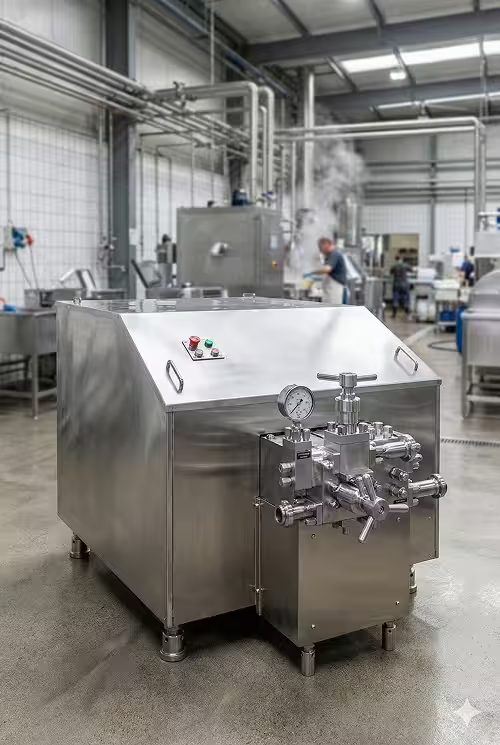
What Is Homogenizer Service? (Definition)
Homogenizer service refers to the scheduled inspection, cleaning, part replacement, and pressure calibration of a high-pressure homogenizer to maintain its designed output, uniform fat globule size, consistent pressure, and rated LPH capacity. In Indian dairy and food processing plants, this typically involves the homogenizing valve assembly, plunger seals, crankcase lubrication system, and pressure gauges.
Proper, scheduled service keeps your product quality consistent (texture, viscosity, shelf life) and prevents the unplanned breakdowns that stop production lines cold.
Related: TITAN Series Homogenizers by SEW
5 Warning Signs Your Homogenizer Needs Immediate Service
Waiting for a complete breakdown is the most expensive maintenance strategy. These five signs mean service cannot be deferred:
Need urgent homogenizer service support?
SEW provides on-site inspection, valve overhaul, seal replacement, and AMC support for dairy and food plants across India.
Get Service Support → | Call +91 8007865449
1. Pressure fluctuations at set PSI
If your pressure gauge shows instability rising and falling without reason at your set operating pressure, your homogenizing valve seats or spring assemblies are worn. This is the earliest and most reliable warning sign.
2. Visible product quality drop
Inconsistent texture, fat separation, or shortened shelf life in your milk or ice cream product traces back to a worn homogenizing valve that is no longer producing uniform emulsification. If QC flags it, the homogenizer is the first place to check.
3. Unusual noise or vibration during operation
Knocking, rattling, or increased vibration during operation points to wear in the crankshaft, connecting rods, or plunger assembly. Left unaddressed, this leads to catastrophic mechanical failure, not just a valve replacement.
4. Oil leakage or discoloured crankcase oil
Clean oil in the crankcase is non-negotiable. Darkened or milky lubricant means contamination, either process fluid leaking through a failed seal into the crankcase or thermal degradation from overloading. Both require immediate attention.
5. Reduced LPH output (capacity drop)
A measurable drop in your homogenizer's throughput, even 10–15%, signals worn plunger seals or a partially blocked valve assembly. In a high-output dairy plant, this loss compounds across shifts.
If you see any of these: Request a service inspection from SEW
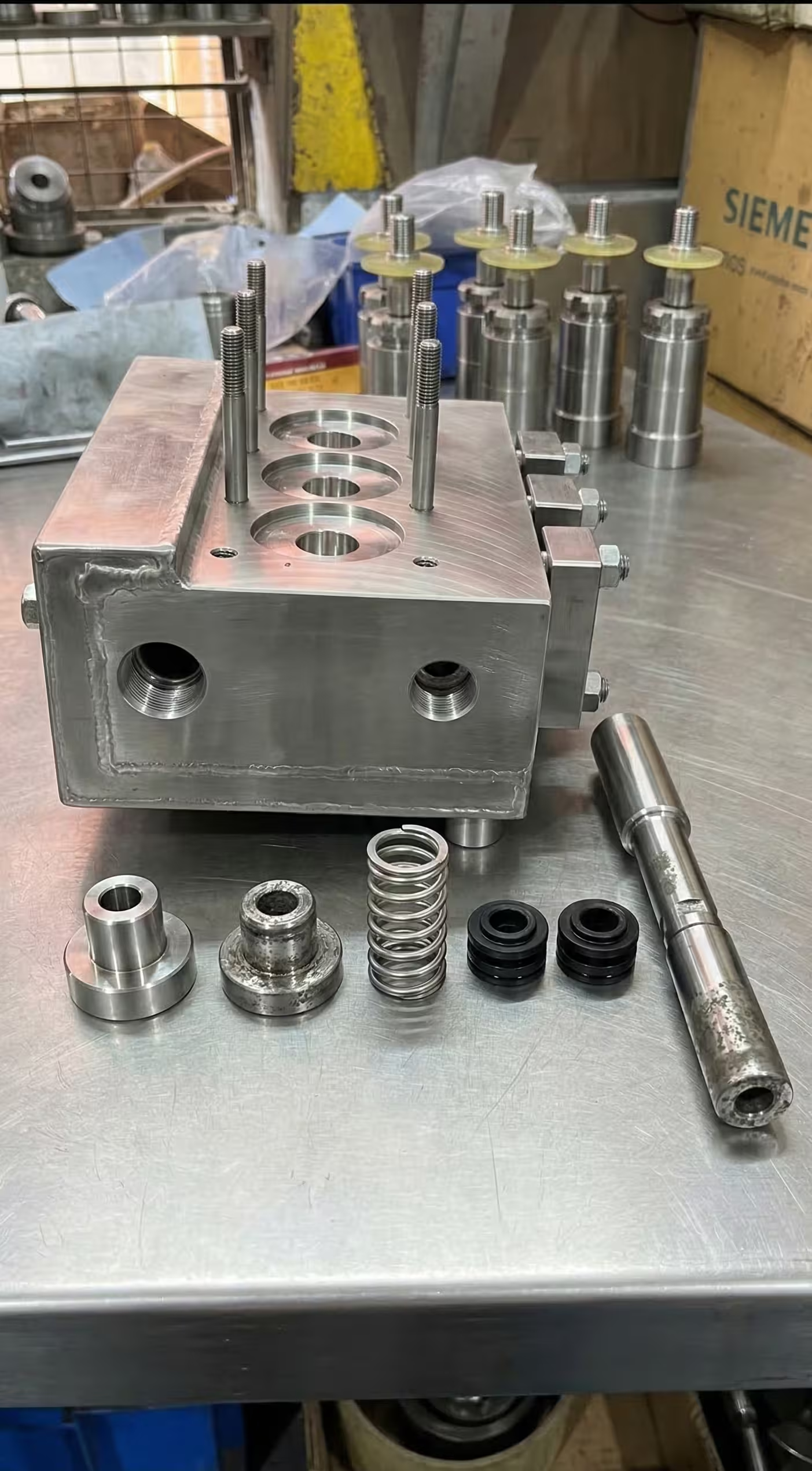
Homogenizer Maintenance Schedule (By Operating Hours)
Calendar-based maintenance is unreliable for industrial homogenizers. A plant running two shifts per day degrades components twice as fast as a single-shift operation. Schedule by operating hours, not months.
Daily Checks (Every Operating Shift)
1. Check crankcase oil level; top up if below the indicator mark
2. Inspect for leaks at stuffing boxes and valve assembly connections
3. Confirm operating pressure is stable at set point
4. Listen for abnormal mechanical noise during startup
Weekly Checks
1. Tighten all external fasteners
2. Inspect and clean product inlet/outlet connections
3. Verify cooling water flow (if applicable)
4. Check pressure gauge accuracy against a reference
Minor Service, Every 250–400 Operating Hours
1. Replace plunger seals and packing (high-wear consumables)
2. Inspect homogenizing valve faces and replace on visible wear or pitting
3. Drain and inspect crankcase oil; replace if contaminated or degraded
4. Check connecting rod bearing clearances
5. Lubricate all grease nipple points per OEM specification
6. Run a pressure calibration check against your spec sheet
Major Overhaul, Every 1,000–1,500 Operating Hours
1. Full valve assembly disassembly, cleaning, and inspection
2. Plunger inspection for scoring; replace if surface is outside spec
3. Crankshaft inspection and bearing replacement as required
4. Replace all elastomeric seals regardless of visual condition
5. CIP passivation of all product-contact wetted surfaces
6. Full pressure test at maximum rated PSI before return to service
These intervals are standard guidelines for two-stage high-pressure homogenizers used in dairy and food processing. Always follow the maintenance intervals in your OEM manual. Product viscosity, temperature, and duty cycle all affect component wear rates.
Related: SEW Service & Repair for TITAN Series and third-party homogenizers
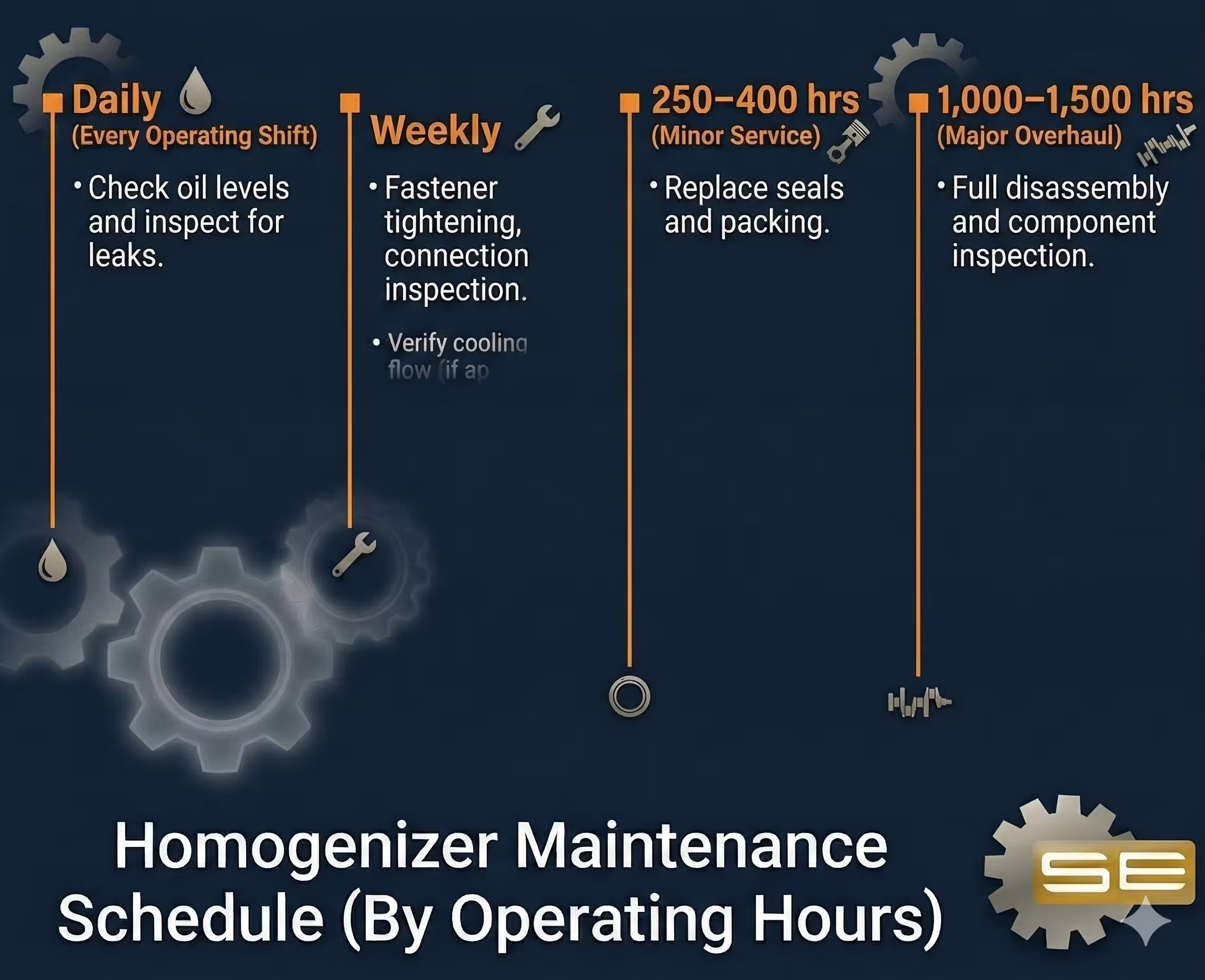
Homogenizer Wear Parts: What to Stock On-Site
Homogenizer maintenance and spare parts availability are the single biggest variables in how long a breakdown lasts. For Indian plants outside Maharashtra, where courier delivery times vary, stocking critical consumables on-site is the most effective way to reduce repair downtime.
Stock these at your facility:
| Part | Why It Fails | Replace At |
|---|---|---|
| Plunger seals / packing sets | High-pressure friction wear | Every 250–400 hours |
| Homogenizing valve seats | Impact and erosion from product | Inspect every major service; replace on wear |
| Valve springs | Fatigue from continuous cycling | Every 1,000 hours or on pressure instability |
| Crankcase oil (OEM grade) | Contamination, thermal degradation | Every minor service |
| O-ring and gasket kit (food-grade) | Compression set, chemical compatibility | Every major overhaul |
For CIP-ready homogenizers used in dairy (including all SEW TITAN Series units), ensure all replacement seals and gaskets are food-grade compliant. Non-compliant parts will fail the FSSAI hygiene inspection.
Related: Milk Homogenizer
Service vs Repair vs AMC: Which Contract Do You Need?
Many plant owners use these terms interchangeably. They are different and choosing the wrong structure can leave your plant underprotected or overpaying.
| Parameter | Scheduled Service | Breakdown Repair | Annual Maintenance Contract (AMC) |
|---|---|---|---|
| Trigger | Planned, at set intervals | After a failure | Covers both — planned + emergency |
| Cost structure | Predictable per visit | Variable; often high | Fixed annual fee |
| Downtime impact | Low — parts pre-ordered, planned shutdown | High — wait for technician + parts | Low — priority response included |
| Best for | Plants with internal maintenance staff | One-off issues, older equipment | High-output plants that cannot afford downtime |
| Parts included | As per service scope | Quoted separately | Defined in AMC scope; some include consumables |
| Response time | Scheduled | On-demand (variable SLA) | Priority SLA — faster response |
For Indian dairy plants running more than one shift per day, an AMC with your OEM or authorized service partner almost always pays for itself. A single unplanned breakdown, including emergency labor, expedited parts, and one day of lost production, typically exceeds the annual AMC cost.
Related: Homogenizer vs High Shear Mixer — which is right for your dairy plant?
How to Evaluate High-Pressure Homogenizer Repair Companies in India
Not all service providers are equal. Before signing an agreement, verify these five things:
1. OEM authorisation or proven manufacturing depth
The most reliable homogenizer repairs come from OEM manufacturers or companies with documented manufacturing experience on your specific homogenizer type. A general mechanical contractor who has never built a homogenizer is not the same as an OEM service team. Ask for plant references.
2. Technical scope beyond spanner work
Good service engineers understand emulsification physics and pressure dynamics, not just component replacement. They should advise on valve clearances, pressure calibration targets, and product quality outcomes and flag when a service finding points to an underlying operating issue.
3. Spare parts lead time to your location
Ask directly: how long does it take to get plunger seals and valve seats to your plant? This is the real SLA that matters. A Nashik-based manufacturer can reach Maharashtra, Gujarat, and Tamil Nadu plants within 1–2 days by courier. Confirm this for your location before committing.
4. Pan-India reach and field service capability
Many OEM manufacturers in Nashik, Pune, and Coimbatore service plants pan-India. Confirm the provider has a field service team that can reach you,you not just a spare parts dispatch capability.
5. Food-grade and FSSAI compliance knowledge
For dairy and food processing, your service partner must understand FSSAI hygiene requirements and CIP validation. All replaced food-contact parts should be food-grade certified and documented for your compliance records.
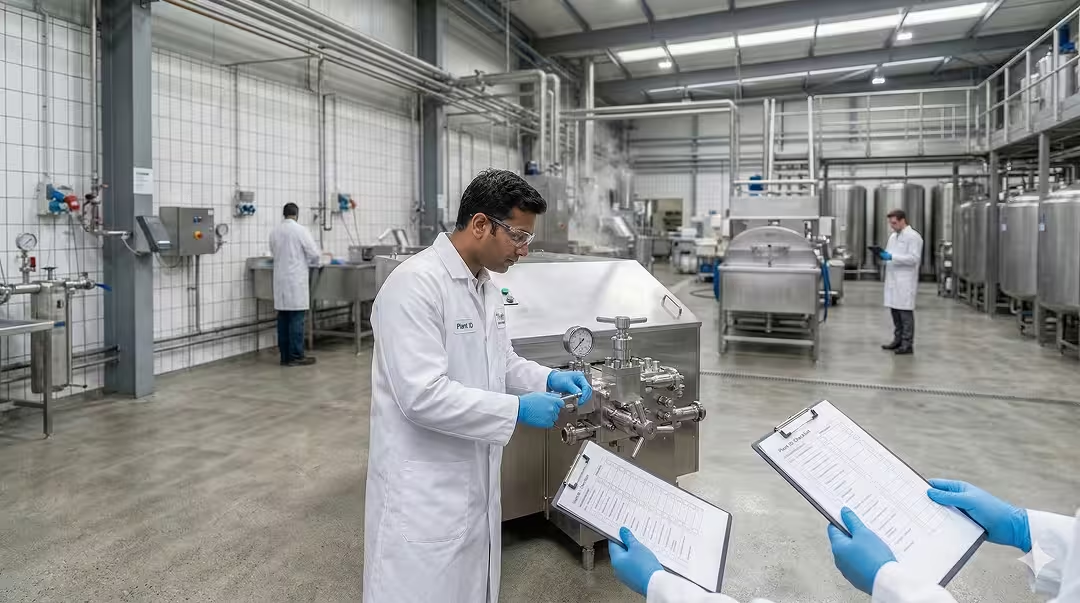
Homogenizer Service from System Engineering Works, Nashik
System Engineering Works manufactures the TITAN Series homogenizers in Nashik, Maharashtra and provides field service for both SEW equipment and third-party homogenizers across India.
Why us?
- Est. 2002, 20+ years manufacturing high-pressure homogenizers
- 2,500+ units delivered to 200+ clients pan-India
- ISO 9001:2008 certified
- Service reach: Maharashtra, Gujarat, Tamil Nadu, Kerala with pan-India field dispatch
What our homogenizer service includes:
- On-site inspection and pressure testing
- Full valve assembly overhaul
- Plunger seal and packing replacement
- Crankcase oil service and lubrication check
- CIP readiness validation for FSSAI food-grade compliance
- Post-service pressure calibration to your operating specification
- AMC options for TITAN Series and select third-party models
"In Indian manufacturing, ruggedness and service matter most. SEW delivers both. Their pumps handled our chemical plant's tough demands without a hiccup, and maintenance has been minimal."
> Maintenance Head, Agri Search
"We purchased Titan Series Ice Cream Homogenizer, 500 LPH capacity for our frozen foods plant in Kerala and they provide us with extra spares with the delivery."
> Co-founder, Chocoberry Ice creams, Kerala.
Request a service quote or AMC proposal.
Learn more about our service capabilities

Frequently Asked Questions
How often should a homogenizer be serviced in an Indian dairy plant?
For a two-stage high-pressure homogenizer running one to two shifts per day, the standard schedule is a minor service every 250–400 operating hours (plunger seals, oil check, valve inspection) and a major overhaul every 1,000–1,500 operating hours. Calculate intervals by actual operating hours not calendar months. A plant running two 8-hour shifts covers 400 hours in 25 working days.
What is the most common cause of homogenizer failure in India?
Neglected plunger seals are the leading cause of unplanned homogenizer failures in Indian dairy and food plants. When seals wear through without replacement, process fluid enters the crankcase, contaminates the lubricating oil, and causes rapid bearing failure. This is entirely preventable with a 250–400 hour service schedule.
How long does homogenizer repair take?
A minor service seal replacement, oil change, valve inspection takes 4–8 hours for an experienced technician with parts on hand. A major overhaul with full valve disassembly and bearing inspection takes 1–2 days. Pre-stocking critical spare parts at your facility is the single most effective way to reduce repair downtime.
What are homogenizer wear parts and which ones wear fastest?
Homogenizer wear parts are the components that degrade through normal operation: plunger seals, valve seats, valve springs, and o-rings. Plunger seals wear fastest — typically every 250–400 operating hours in continuous dairy production. Valve seats follow. Keep a minimum of one set of each on-site to avoid waiting for courier delivery during a breakdown.
Can a homogenizer be repaired if the crankshaft is damaged?
Yes, in most cases. The forged steel crankshaft in a well-built homogenizer is serviceable either through reground surface finishing or direct replacement. Repair feasibility depends on the degree of scoring and OEM parts availability. Have your service provider assess on inspection before committing to a full replacement.
What is the difference between a single-stage and two-stage homogenizer for maintenance purposes?
Two-stage homogenizers have a second valve assembly (the backpressure valve) in addition to the primary homogenizing valve. This means two sets of valve seats to inspect at each service, and marginally higher maintenance cost. For dairy and ice cream, two-stage homogenizers are standard because they produce finer, more stable emulsions the additional maintenance cost is justified by the product quality difference.
Is an AMC worth it for a homogenizer in an Indian dairy plant?
For any plant running more than one shift per day on a single homogenizer, an AMC almost always pays for itself. Estimate the cost of one day's lost production on your line. Compare that to your annual AMC quote. In most Indian dairy operations, one unplanned breakdown including emergency call-out, parts, and lost product exceeds the annual AMC value.
How do I find a homogenizer service company outside Maharashtra?
Start with the OEM manufacturer's service network. Most Indian homogenizer manufacturers (based in Nashik, Pune, Coimbatore) operate pan-India field service teams. For SEW TITAN Series, contact us, we service clients across Maharashtra, Gujarat, Tamil Nadu, and Kerala, with field dispatch available nationally.
Key Takeaways
- Schedule maintenance by operating hours, not calendar months use 250–400 hours for minor service, 1,000–1,500 for major overhaul
- The 5 warning signs that demand immediate action: pressure fluctuation, product quality drop, unusual noise, contaminated oil, reduced LPH output
- Stock critical homogenizer wear parts on-sitelike plunger seals, valve seats, o-ring kit to cut breakdown repair time
- For high-output plants: an AMC is more cost-effective than breakdown repair
- Choose a service partner with OEM manufacturing depth, not just a mechanical contractor
Talk to a homogenizer service engineer — free 30-min consultation
Related Reads
- Homogenizer vs High-Speed Mixer
- High-Pressure Homogenizers in Ice Cream Production
- Homogenizer Product Category
- Service & Repair